
Chiku Mansion: The Definitive Investment & Lifestyle Analysis of District 15's Newest Freehold Boutique
As capital shifts rapidly away from depreciating leasehold assets, boutique freehold properties in prime heritage enclaves are a rare defensive moat.
 Mervin Yu
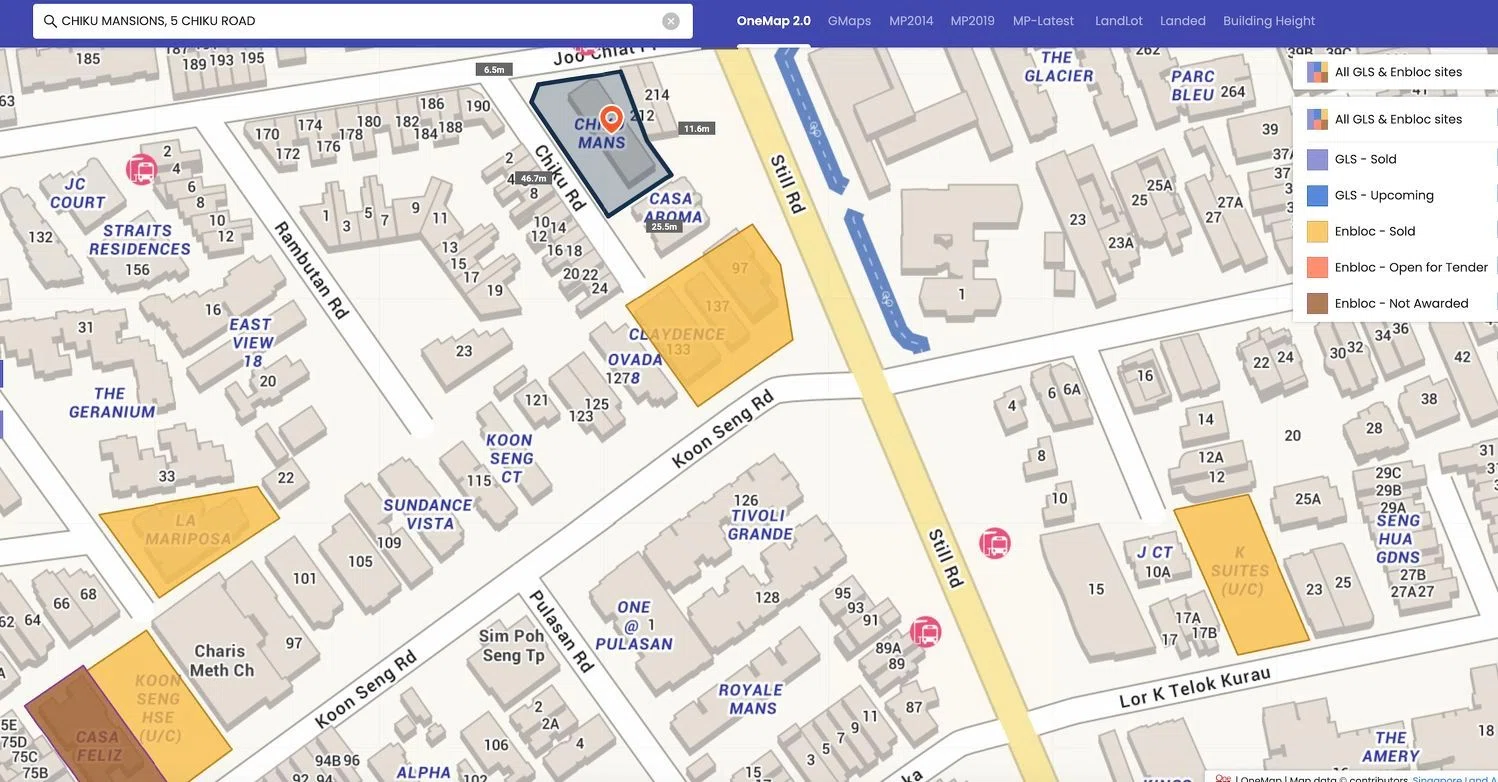
As capital shifts rapidly away from depreciating leasehold assets amidst structural macroeconomic shifts, boutique freehold properties in prime heritage enclaves present an increasingly rare defensive moat. This is our highly detailed, quantitative, and qualitative analysis of Chiku Mansion on Chiku Road.
1. Executive Summary: The Macro Perspective
In the highly dynamic Singapore residential real estate market, District 15 (covering East Coast, Marine Parade, Katong, and Joo Chiat) has long been regarded as the premier choice outside the Core Central Region (CCR). Historically characterized by its distinct seaside lifestyle, vibrant heritage preservation architecture, and highly concentrated academic infrastructure, the district has consistently outperformed broader Rest of Central Region (RCR) indices.
However, the contemporary market environment presents a clear paradox. On one hand, buyers are faced with massive mega-launches of 600 to over 1,000 units. While these developments boast extensive, theme-park-like facilities, they inevitably suffer from high density, standard floor layouts, and a lack of authentic community character. On the other hand, the supply of freehold land in established premium enclaves has dramatically dwindled. New government land sales (GLS) are uniformly restricted to 99-year leasehold tenures, making private en-bloc redevelopments the sole remaining pipeline for brand-new freehold residential inventory.
This is where Chiku Mansion enters the equation. Acquired en-bloc by the highly decorated boutique developer Macly Group for over $22 million, the site is slated for redevelopment into a highly exclusive private residence of fewer than 20 units. With an acquisition land rate of approximately $1,180 per square foot per plot ratio (psf ppr) and no land betterment charge payable, the developer enters the cycle with an efficient financial base. This translates to an estimated launch price ranging between $2,3xx to $2,7xx psf. In a landscape where leasehold suburban properties frequently breach the $2,100 psf threshold, Chiku Mansion represents a compelling defensive play with high capital preservation potential.
2. The Developer: Macly Group's Boutique Blueprint
To evaluate the potential of any boutique development, one must thoroughly scrutinize the developer's historical execution capabilities. In large-scale developments, minor construction discrepancies can be masked by the sheer volume of amenities; in boutique projects, every millimeter of spatial layout is exposed to the owner's daily routine. Thus, developer pedigree acts as a foundational risk-mitigation factor.
Macly Group has spent more than two decades refining its identity as Singapore's leading specialist in boutique and mid-sized residential developments. Far from trying to replicate the standardized, volume-driven structures of institutional mega-conglomerates, Macly focuses on "spatial engineering." Their portfolio includes successful case studies such as The Ivera, Jansen House, Tedge, and Koon Seng House. These projects are characterized by several core pillars:
- GFA (Gross Floor Area) Efficiency: Macly's architectural layouts are highly engineered to minimize redundant spaces like excessively long hallways, over-allocated air-conditioner ledges, and non-functional structural pillars.
- Premium Spatial Volume: Many of their boutique developments feature higher-than-average ceiling heights and customized dual-key or loft variations that maximize vertical space, dramatically increasing the perceived volume of the unit.
- Design-Led Individuality: Unlike cookie-cutter masterplans, Macly's facades are crafted to complement local architectural heritage. In the case of Chiku Mansion, the design is anticipated to blend organically with the surrounding low-rise Peranakan conservation houses.
For buyers, purchasing a Macly-designed asset provides a clear liquidity benefit in the resale market. Because their developments are highly customized and exclusive, they rarely face the "internal price competition" seen in mega-projects, where dozens of identical units are listed simultaneously by desperate sellers, triggering a race to the bottom.
3. Macro & Micro Location Dynamics: The Joo Chiat Enclave
Location is a multidimensional variable. While general real estate marketing focus is placed on broad geographic regions, a sophisticated analysis must dissect the asset's micro-positioning down to its immediate block level.
Micro-Location Quick Facts
- Postal Sector: District 15 (East Coast / Marine Parade / Joo Chiat)
- Specific Address: 5 Chiku Road, 7C, and 9B Chiku Road
- Zoning: Residential, low-density residential enclave characterized by conservation shophouses and low-rise private housing.
- Walkability: Direct, quiet access to Joo Chiat Place and Chiku Road, sheltered from the heavy commercial vehicle traffic of major arterial roads.
Chiku Mansion occupies a highly strategic sweet spot within the Katong and Joo Chiat conservation areas. It sits comfortably back from major, noisy thoroughfares like Still Road and Geylang Road, preserving a peaceful residential character. Yet, it remains exceptionally walkable, putting residents within minutes of Singapore's most celebrated culinary and lifestyle scene.
The Katong/Joo Chiat enclave represents a unique social microclimate in Singapore. Over the past decade, it has evolved from a historic Peranakan residential suburb into a high-end cultural and lifestyle hub. This gentrification has been organic rather than state-orchestrated. Historic shophouses now host artisanal bakeries, boutique fitness studios, specialty coffee roasters, and Michelin-recognized eateries. This is a lifestyle that attracts a high-earning, design-conscious demographic—both local and expatriate. Consequently, rental demand in this specific pocket remains highly insulated from broader macroeconomic shifts, as tenants are willing to pay a premium to live within a highly walkable, culture-rich neighborhood.
Connectivity and Commute Profiles
While the immediate neighborhood invites leisurely exploration on foot, connectivity to the city's key economic nodes remains robust:
- The Rail Network: Residents have access to a tri-station layout. For access to the East Coast Line, Marine Parade MRT Station (TE26) on the Thomson-East Coast Line (TEL) provides rapid, direct access to the Central Business District (Shenton Way, Marina Bay) and Orchard Road without a single train interchange. For access to the East-West Line, Eunos MRT Station (EW7) and Kembangan MRT Station (EW6) are situated nearby, providing a direct link to Changi Airport, Paya Lebar Regional Hub, and Raffles Place.
- The Road Network: By car, Chiku Mansion enjoys immediate proximity to major expressways. A three-minute drive connects residents to the Pan Island Expressway (PIE) and the East Coast Parkway (ECP), placing the financial district, Marina Bay Sands, and Changi Airport within an efficient 12-to-15-minute commute window.
4. The Educational Anchor: "The 1km Radius" and Resale Liquidity
In Singapore's primary school enrollment system, geographical proximity to prestigious institutions is arguably one of the most powerful, recession-proof drivers of real estate value. The Ministry of Education's (MOE) primary school registration system prioritizes applicants living within a 1km radius under Phase 2C. Because of this, affluent young families consistently target properties within these designated boundaries, creating a structural demand floor that is entirely independent of interest rate movements or global stock market volatility.
| School Name | Approximate Distance | Impact Class |
|---|---|---|
| Haig Girls' School | 406m | Primary Anchor (<1km) |
| CHIJ (Katong) Primary | 991m | Secondary Anchor (<1km) |
| Tao Nan School | 1.14 km | High Demand Proximity |
| Tanjong Katong Primary School | 1.20 km | High Demand Proximity |
| Kong Hwa School | 2.00 km | Regional Elite School |
As detailed above, Chiku Mansion sits extremely comfortably within the ultra-critical 1km radius of both Haig Girls' School (approx. 406m) and CHIJ (Katong) Primary School (approx. 991m). Haig Girls' School is highly regarded for its holistic education and nurturing environment, making it a major draw for families with daughters. Additionally, top-tier secondary institutions like Tanjong Katong Girls' School (TKGS) and Tanjong Katong Secondary School sit within a short commute, cementing this location as a highly stable, multi-decade family ecosystem.
From an investment perspective, this educational profile acts as a built-in exit strategy. When the initial buyer eventually decides to exit the investment—typically after a holding period of 5 to 10 years—the asset is highly liquid. The buyer pool is constantly replenished by a fresh cohort of young parents eager to secure their child's educational pathway. This constant demand creates a highly reliable floor price, protecting the asset from capital depreciation even during real estate downturns.
5. Investment Thesis: Freehold Scarcity & Capital Preservation
To fully appreciate the investment thesis of Chiku Mansion, we must analyze the structural mechanics of land tenure in Singapore. Singapore's total land area is finite, and the state tightly controls the supply of land through the Government Land Sales (GLS) program. Crucially, all GLS sites released for private residential development are strictly sold on a 99-year leasehold basis. There are no new freehold land sites being generated by the state.
Consequently, the pool of freehold residential property in Singapore is a shrinking percentage of total housing stock. Every time a freehold site is redevelopment-blocked or transformed into public infrastructure, the overall proportion of freehold title decreases. This sets up a classic economic dynamic of expanding demand chasing a structurally fixed, scarce supply.
The Financial Mathematics of Bala's Table and Lease Decay
In real estate financial modeling, "Bala's Table" is the industry-standard curve used to calculate the value of leasehold land relative to freehold land over time. The curve is non-linear; the rate of value depreciation accelerates dramatically as a leasehold property crosses the 30-to-40-year mark.
Let $V_{t}$ represent the value of a leasehold property at lease year $t$, and $V_{f}$ represent the equivalent freehold value. The relationship can be modeled as:
$$V_{t} = V_{f} \times (1 - (1 - r)^t)$$Where $r$ represents the implicit discount rate determined by lease length and the Singapore Land Authority (SLA) table of lease state values. When $t$ drops below 60 years, the discount rate accelerates. Freehold assets like Chiku Mansion completely bypass this mathematical decay curve. They retain $100\%$ of their land value indefinitely, acting as a highly reliable long-term inflation hedge and wealth preservation vehicle for future generations.
Quantitative Comparison: Leasehold Decay vs. Freehold Preservation
Imagine two properties purchased at equivalent PSF values in District 15: Property A (99-Year Leasehold) and Property B (Chiku Mansion, Freehold).
- Year 0 - 20: Both track closely, driven by initial rental yields and brand-new facilities.
- Year 20 - 40: Property A begins to experience a slow divergence as the remaining lease drops below 60 years. Banks begin restricting CPF usage and loan-to-value (LTV) limits for older prospective buyers.
- Year 50+: Property A faces severe liquidity constraints and accelerating depreciation. Property B (Chiku Mansion) retains its full premium, supported by its underlying permanent land value and potential for collective sale (en-bloc) at a premium.
En-bloc Entry Pricing Analysis
The financial viability of Chiku Mansion's future launch is highly supported by the developer's conservative entry price. Acquired for over $22 million, the land rate works out to approximately $1,180 psf ppr. Because the site is small and has a low baseline density, there is no major land betterment charge payable to the government. This keeps the developer's break-even cost exceptionally clean.
Assuming a standard construction and finishing cost of $350 to $400 psf, professional fees, marketing overheads, and interest carrying costs of approximately $200 psf, we can model the developer's break-even cost at approximately $1,800 to $1,900 psf. Assuming a standard developer profit margin of $15\%$ to $20\%$, the projected launch price of $2,3xx to $2,7xx psf is highly realistic and structurally supported. This pricing is highly competitive, especially when contrasted with recent 99-year leasehold suburban launches that are testing the $2,200 to $2,400 psf range.
6. Comparative Landscape: Chiku Mansion vs. Competitors
To establish a rigorous framework for evaluating Chiku Mansion, we must compare it against the broader competitive landscape of District 15. The district is currently home to a mix of mega-developments and smaller boutique options, each catering to different buyer profiles.
| Project Name | Tenure | Unit Count | Estimated/Transacted PSF | Positioning & Target Audience |
|---|---|---|---|---|
| Chiku Mansion | Freehold | <20 Units | $2,3xx - $2,7xx (Est.) | Ultra-private, low-density, premium own-stay. |
| Koon Seng House | Freehold | 17 Units | $2,228 - $2,410 | Boutique heritage-focused, similar pricing bracket. |
| The Continuum | Freehold | 816 Units | $2,700 - $2,900 | Premium mega-freehold, high density, extensive facilities. |
| Tembusu Grand | 99-Year | 638 Units | $2,400 - $2,550 | Leasehold mass-premium, full condo facilities. |
| Grand Dunman | 99-Year | 1,008 Units | $2,500 - $2,650 | Leasehold mega-project, directly adjacent to MRT. |
The Strategic Divergence
When analyzing the table above, the strategic positioning of Chiku Mansion becomes clear. It is positioned as a direct counter-narrative to the mega-projects like The Continuum, Grand Dunman, and Tembusu Grand. While those projects offer extensive grounds and numerous swimming pools, they come with substantial trade-offs:
- Density and Privacy: In a 1,008-unit development like Grand Dunman, communal facilities are constantly shared with thousands of other residents. Quiet weekends are rare, and elevator wait times during peak morning hours can be a daily annoyance. In contrast, Chiku Mansion offers an intimate, highly private sanctuary. With fewer than 20 units, residents share facilities with a select group of like-minded neighbors, ensuring true exclusivity and peace of mind.
- Maintenance Costs and Sinking Funds: Massive, high-maintenance amenities such as sprawling water features, multi-story clubhouses, and extensive concierge services require a large and expensive maintenance budget. Over time, as the development ages, the maintenance fees (maintenance contributions) can escalate. In a boutique development like Chiku Mansion, the absence of bloated, unnecessary facilities keeps maintenance fees lean and predictable, while still providing high-quality essential amenities like private parking, secure access control, and well-curated gardens.
- Pricing Premium vs. Value Protection: Notice that The Continuum (a freehold project) commands a steep premium, transacting well into the $2,7xx to $2,9xx psf range. By entering Chiku Mansion at an estimated $2,3xx to $2,6xx psf, buyers are essentially securing a premium freehold title at a significant discount to the district's mega-freehold benchmarks. This lower entry barrier provides a much wider margin of safety and a higher potential for capital appreciation over the long term.
7. Architectural Design & Layout Optimization
In a boutique development of this scale, architectural design cannot be an afterthought. Macly Group is expected to bring its signature "spatial engineering" to Chiku Mansion, maximizing both physical efficiency and spatial volume. Rather than cramming units with unnecessary corridors, the layout of each apartment is optimized to ensure maximum usable area.
We anticipate that Chiku Mansion will offer a highly curated selection of unit types, ranging from compact, high-yield 2-bedroom units for savvy investors, to expansive 3 and 4-bedroom layouts designed for multi-generational families. A key focus will be placed on cross-ventilation, taking advantage of the surrounding low-rise environment to channel cool breezes throughout the living spaces. Additionally, high-end materials, premium kitchen appliances, and smart home automation will be seamlessly integrated into every unit, providing a refined, modern living experience that stands the test of time.
8. Unbiased Critique: Pros vs. Cons Analysis
A truly objective analysis must avoid one-sided marketing hype. Every real estate investment involves calculated trade-offs. To make an informed decision, prospective buyers must carefully weigh the specific advantages and limitations of Chiku Mansion.
The Advantages (The Pros)
- Permanent Wealth Preservation: Freehold tenure ensures no lease decay risk, making it an excellent legacy asset for generational wealth transfer.
- Quiet, High-End Enclave: Tucked away in a quiet residential pocket of Joo Chiat, yet highly walkable to top-tier cafes, gyms, and dining spots.
- Elite Educational Access: Situated comfortably within the high-demand 1km radius of Haig Girls' School and CHIJ Katong Primary.
- Excellent Price-to-Value Ratio: Highly competitive entry pricing ($2,3xx to $2,7xx psf) compared to neighboring leasehold developments and high-density freehold projects.
The Trade-Offs (The Cons)
- Lighter Facility Footprint: Lacks expansive, high-maintenance facilities like a 50m Olympic pool, tennis courts, or grand multi-story clubhouses.
- No Direct MRT Connection: While well-connected by local bus services and expressways, the MRT stations (Marine Parade, Eunos) require a short commute or a brisk walk.
- Boutique Transaction Volume: With under 20 units, historical transaction data will be thin. Resale pricing will rely on surrounding district benchmarks rather than a continuous stream of internal transactions.
9. Target Demographics: Who Is Chiku Mansion For?
Given its unique product architecture, strategic location, and financial profile, Chiku Mansion is highly targeted to three distinct buyer profiles:
- The Multi-Generational Wealth Builder: Individuals looking to transition their capital out of highly volatile financial markets or depreciating 99-year leasehold assets into a stable, long-term legacy home that can be passed down to children without the threat of lease decay.
- The Discerning Owner-Occupier: Professionals and families who prioritize a quiet, low-density, high-privacy living environment over massive, noisy developments. These buyers value being surrounded by the rich lifestyle and historic character of Joo Chiat, and appreciate a home that feels more like a private landed residence than a high-rise tower.
- The Value-Driven Investor: Investors seeking capital preservation combined with stable rental yields. The proximity to Haig Girls' School and the vibrant Joo Chiat culture ensures a constant pool of high-quality, professional tenants, while the highly competitive entry price ensures a strong margin of safety from day one.
10. Final Verdict: Buy, Hold, or Pass?
Our final assessment of Chiku Mansion is a definitive BUY, subject to individual financial planning and asset-allocation strategies. In an era where freehold land in prime, mature districts is becoming a rare commodity, this boutique redevelopment stands out as an exceptional value proposition. By combining a highly competitive entry price with the prestigious, high-demand lifestyle of Joo Chiat and immediate access to top-tier educational institutions, Macly Group has positioned Chiku Mansion to be one of the most resilient, capital-secure launches in recent years.
For buyers who value privacy, long-term wealth preservation, and rich lifestyle convenience over high-density, facility-heavy developments, Chiku Mansion represents an asset of absolute scarcity that will continue to appreciate in value and character for decades to come.
Need Help Comparing Options?
I can help you compare this with other District 15 launches.
Contact Mervin Yu